The Blog is more interactive and allows greater participation from our readers. Please register on the new blog and we look forward to seeing you at our next LLP!
Monday, June 28, 2010

Thursday, June 24, 2010
IDIA Sensitisation programme at Tumkur
We were quite a varied bunch that attended the IDIA sensitization projects in Tumkur, Karnataka. Conducting the programme along with students of the National law school of India, Bangalore (Adithya Banavar, Amshula Prakash and Aathira Menon), there were two students from engineering colleges- Balachandru and Brijesh. Prakruthi Gowda, who has recently graduated from NUJS Kolkata, had set up the programme in two colleges- Vidyavahini PUC College and Siddaganga PUC College for women. The team arrived at Vidyavahini College on Tuesday morning around 10:00 where Prakruthi had spoken to the principal and made arrangements for two sessions. This was a co-educational institution with almost an equal ratio of boys to girls. Prakruthi suggested the session be conducted in Kannada, as it may be more effective then. Doubts were raised as to the need for students to comprehend an English presentation, as the aptitude test demanded a basic understanding of English. However a decision was made to conduct the session in Kannada and Prakruthi very effectively conducted all the sessions in Kannada.
We started the first session with a video clipping from an English television show (Just legal) in which a character gives an inspiring speech on the aim of law and about how law is about the truth but needs a lawyer to actually uphold and fight for it. We had hoped this speech would excite the students and perhaps get them interested in the option of choosing law as a career. However most of the students failed to grasp the American accent and the video clipping proved ineffective. Most of the students responded more favourably when asked about a Kannada television serial called Mukta Mukta about criminal law. The students were then asked if any of them had considered the legal profession as a career option and a few students seemed interested. Prakruthi then started the session by talking about what lawyers do and the diverse options one has after doing law. We then showed the students some clippings of famous lawyers such as Mahatma Gandhi, Abraham Lincoln, Jawaharlal Nehru, SM Krishna, Hilary Clinton and Barack Obama. The students however seemed most excited when told that Malavika Avinash, a Kannada television actress was a lawyer who had graduated from National Law School of India University. In fact there were more students who recognized Malavika than Obama.
Prakruthi then went on to discuss the various universities where one can pursue law and the advantage of pursuing it at one of the ten National Law schools in terms of better quality of education, Infrastructure and recruitment. The students were informed about the high pay packages given to students from law schools and campus placement. The fact that Prakruthi, who is from tumkur had managed to attend a national law school and be placed in a good job seemed to encourage them. After this details of the IDIA project were given. Students seemed apprehensive about the areas they would be tested on and their various doubts were cleared. The second session at Vidyavahini was also conducted in a smooth manner. For this session we decided to scrap the Just legal video and merely concentrated on the presentation. Fewer students from this batch wanted to do law as they were science students and had decided to do engineering/medical. A few students also had decided to pursue agriculture as a degree course. However after the session a number of students registered their names for the aptitude test.
The next college we visited was Siddhaganga where there were three sessions. Initially, the principal was hesitant to let us address the science students as he believed that they would not be interested in law. As the Arts stream in this college was completely kannada medium we decided to concentrate on the commerce students. In the first session conducted for the commerce students, a number of them had decided to do CA or MBA and only one student had contemplated doing law. We also saw that when asked questions about law or any general questions only one or two students answered. They seemed much more comfortable when spoken to in Kannada than English though all of them knew English.The only student who had decided to do law was planning on pursuing it in the local law college (Vidyodaya Law College). She seemed interested in the idea of National law schools and we told the students the advantages of pursuing law as a professional 5 year course in a National law school. The fact that students wanted to do CA or study in local colleges shows that they are unwilling to leave the town they are from. This may be due to parental pressure as they are girls and not expected to leave the town for higher education. In the next session, unknown to us, a number of first year students attended the session and were enthusiastic about pursuing law. It is a good idea for IDIA to inform students in 1st PU (or 11th std) about the possibility of law as a number of students in the 2nd PU have already decided what higher studies to pursue. At this stage they may already have enrolled for Engineering or other entrance exam coaching. The third session consisted of science students.
In the second and the third session we showed a video of the Kannada television show Mukta Mukta. Due to the bad picture quality, sound quality and other infrastructural difficulties, this video too seemed ineffective in inspiring the students. We stopped the video midway and focused on the presentation. Here we also recounted personal experiences of choosing law over engineering/medical/CA. This was a good idea as it encouraged the students to think of law as a viable option as opposed to a last resort. It is also a good idea to tell students of the various options they have after doing law and the importance of law in every field, be it IP or corporate. The most important consideration for these students seemed to be salary as opposed to social justice. Post this session a few students came up to us and asked doubts individually as they were shy to raise these questions in front of the other students. There were also a few students from the Kannada medium who were keen on writing the test. A number of students also decided to give the test based on the reaction of their peers. Prakruthi also conducted two more sessions in Vidyavahini on Wednesday morning before the tests.
The tests in both the colleges saw a good turnout. Almost 150 (148 in all) students wrote the test in Siddhaganga and an overwhelming 244 students from Vidyavahini wrote the test. Almost all students managed to finish the test within the time provided but most of them seemed dissatisfied with it. A number of students from Siddhaganga also mentioned that the test was too tough. They wanted to use their calculators for the mathematics section in the paper and a number of them did not understand the questions in the personal information column (For eg: Students could not grasp the meaning of the question- Have you ever considered a legal career?). There were some positive responses though. One student from Vidyavahini asked a number of doubts and is from an economically backward background. The IDIA programme did manage to create awareness about law schools and we hope to conduct a similar session in the boys wing of the Siddaganga college soon.
Photos can be found here.
Report prepared by Aathira Menon
Sunday, June 20, 2010
IDIA Sensitisation programme at Shanti Bhavan
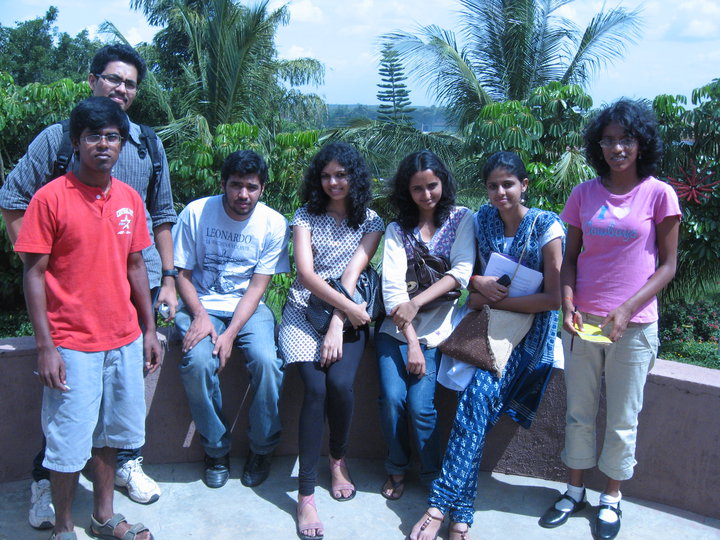
As part of the IDIA project- Karnataka chapter, a team of six students[1] visited Shanti Bhavan- a school in Baliganapalli, an impoverished area in the Krishnagiri district of Tamil Nadu that targets children of deprived backgrounds. A student of Shanti Bhavan, Rajini Murugeshjan, has made it into the National Law School of India University, Bangalore after writing CLAT 2010 and we were hoping to find more students who are interested in pursuing law as a career option.

Adithya Banavar started the session by talking a bit about the project to about 60 students from the 8th -12th grade and the option of law as a career option. Only one student from the 12th grade was interested in pursuing law. Most of the other students were either undecided or favoured Engineering or Business. A lot of students were apprehensive about law as they felt that belonging to a particular stream in the 12th grade would hinder their admission into law school.

After clearing their doubts we proceeded to perform a few skits on varied legal topics such as Constitutional law, Criminal law, Family law and Consumer Protection law. We saw that the children were well versed in English and basic legal knowledge, perhaps owing to the fact that they have learnt civics. They were confident and answered most questions and asked us intelligent questions on legal areas. We then interacted specifically with the 14 students belonging to the 12th grade who were giving the aptitude test. We saw that almost every student had decided which field to specialize in and the disinterest in law was not so much a result of ignorance but the perception of lawyers as being poorly paid. We spoke to them about the various advantages of doing law from a premier legal institution and the various career options one can pursue after doing the course. We also cleared doubts as to the age limit for the course.

We then conducted a 30 minute aptitude test which tested them on English, Mathematics, Logical reasoning, Legal reasoning and General knowledge.

Report prepared by Aathira Menon
[1] Adithya Banavar, Deepika Kinhal, Basavana Gowda, Nishita Vasan, Aathira Menon from NLSIU, Bangalore and Javedur Rahman from NUJS, Kolkata.
Thursday, November 26, 2009
LLP at SOS Childrens Village, Bangalore


It was a pleasant afternoon on the 2nd of October, 2009, when the seven of us - Rahul (V year), Lakshmi (II year), Kanika (III year), Nidhi (III year), Nishita (III year), Aqseer (III year) and Protiti (II year) – packed into a Qualis and trundled off to the SOS Children’t Village on Banerghatta Road. The sight that welcomed us there was such that it made us all stand still in awed delight – lush green and bright flowers, and happy little children everywhere!
We began the LLP with a skit highlighting the necessity of consumer awareness. Kanika portrayed a shopkeeper who sold Aqseer and Lakshmi foodstuffs that had crossed the expiry date. Our audience, which was aged between 12 and 15 years, very correctly pointed out that the customers had not checked the dates of the products before buying them and had not asked for a bill either. The methods of approaching the Consumer Fora and procedures involved therein were explained to them.
Next was a skit on Child Rights, wherein Nidhi portrayed a young girl who was being forced to marry against her wishes while she actually wanted to study further. The children pointed out that it was wrong to not let her study further. Nidhi then told them about the importance of mutual consent for marriage and a child’s Right to Education, while Protiti told them about a child’s Right against Employment and Exploitation.
The next skit depicted domestic violence wherein Protiti portrayed an abused housewife who was being economically, mentally and verbally being tortured by her mother-in-law, played by Nishitha. Rahul, who played the role of the husband, brought home a second wife, Kanika, who was preferred because she could offer higher amounts of dowry. Aqseer discussed the issues of dowry harassment and domestic violence with the children, with many interesting inputs coming from their side as well.
The last skit showed Nidhi, a domestic help, was arrested by a Protiti, playing a Police officer, late at night without a warrant. The essential conditions for arrest were explained to the children.
Nishitha then spoke to them about Legal Aid, and we distributed LSC bookmarks and Melodies! We came back with a happy and content feeling in our hearts.
Reported by
- Protiti Roy
(II Year)
Tuesday, August 4, 2009
A long awaited answer
A confusion which has been perplexing courts and leading to confused judgments for the past five decades, the governments seems to have finally woken up to the fact that the range of laws dealing with children in India, do not actually agree on the definition of a 'child' - the consequence - the menace of child marriage cannot be properly controlled or punished, marital rape above 15 but less than 16, technically the age of statutory rape, remains legal, and dangerous delinquents perfectly capable of understanding the consequences of their actions have been going scot - free under the JJ Act. But now, there appears to be a movement to make the definition of child across all these laws 'uniform'
"Centre to examine anomalies in definition of child: SC told New Delhi, Aug 3 (PTI) The Centre today told the Supreme Courtthat it was examining the issue of removing the anomalies in thedefinition of a child in various existing laws which were comingin way of checking the menace of child marriage. It said the Child Marriage Restraint Act has been repealed withthe new law and the issue has been taken care of. "I have recieved some documents and I will go through them and filean appropriate response," Additional Solicitor General Indira Jaisingsaid before a Bench comprising Chief Justice K G Balakrishnan and Justices P Sathasivam and A K Ganguly which adjourned the matter for four weeks. During the hearing, advocate Aparna Bhat said the new legislation The Prohibition of Child Marriage Act, 2006, which got the President's assent in Janaury 2007, did not completely address the concern over child marriage. Earlier last year, the apex court was told that the Law Commissionwas examining anomalies in the definition of child in various existing laws. The National Commission for Women and the Delhi Commission for Women had said there were anomalies in the definition of child. They contended that the variance in age in different Acts to define a 'minor' or a 'child' was coming in the way of dispensationof justice, particularly in cases of girls below 18 years marrying after eloping with adult male"
"Centre to examine anomalies in definition of child: SC told New Delhi, Aug 3 (PTI) The Centre today told the Supreme Courtthat it was examining the issue of removing the anomalies in thedefinition of a child in various existing laws which were comingin way of checking the menace of child marriage. It said the Child Marriage Restraint Act has been repealed withthe new law and the issue has been taken care of. "I have recieved some documents and I will go through them and filean appropriate response," Additional Solicitor General Indira Jaisingsaid before a Bench comprising Chief Justice K G Balakrishnan and Justices P Sathasivam and A K Ganguly which adjourned the matter for four weeks. During the hearing, advocate Aparna Bhat said the new legislation The Prohibition of Child Marriage Act, 2006, which got the President's assent in Janaury 2007, did not completely address the concern over child marriage. Earlier last year, the apex court was told that the Law Commissionwas examining anomalies in the definition of child in various existing laws. The National Commission for Women and the Delhi Commission for Women had said there were anomalies in the definition of child. They contended that the variance in age in different Acts to define a 'minor' or a 'child' was coming in the way of dispensationof justice, particularly in cases of girls below 18 years marrying after eloping with adult male"
Sunday, July 26, 2009
Weekly Legal Issue #1
In order to enthuse the followers of this blog, members of the LSC and other legal aid enthusiasts, I plan to introduce discussions on points of law concerning the LSC's mandate of dispensation of justice, based on hypothetical fact situations. It is hoped that this would be a weekly exercise.
Fact: X, is a woman who has been subjected to physical abuse by her husband for the last 15 yrs. X decides to file for divorce after her husband's latest abuse involving a hockey stick. X's husband runs away from home in the meanwhile and this is the third time he does so. X, in addition to divorce seeks immediate protection against her husband as she fears more violence on his return, but refuses to resort to criminal action.
Which is the most effective short term legal solution that is available to the woman for the protection of herself and children in addition to divorce?
Is the concept of "nudging" as described in
http://www.economist.com/world/unitedstates/displaystory.cfm?
story_id=12932224
a viable option?
LLP on 17/07/09
The Legal Services Clinic had organised a Legal Literacy Programme for the students of Rockford School, Nagarbhavi, Bangalore. The team of 20 saw an audience of around 40 kids from classes 6th to the 9th. The students had a reasonable knowledge of the theoretical aspects of law but were unaware of the practical applications of the same. The LLP precisely tried to fill that void.
For this purpose the Legal Services Clinic along with it’s volunteers performed short skits on some of the most relevant provisions of the Constitution and other statutes. These were Art. 19(1)(a) of the Constitution, Right to information Act, Consumer Protection Act, Right to Constitutional remedies. Common examples were taken to create an understanding of how law comes to one’s rescue when he is wronged in his day to day work. These skits also helped to send across a message on the power of the black letter of law, which empowers them with knowledge of their genuine interests.
The enthusiastic interaction that ensued between the students and the LSC members assured us that the message had been received well. Their overwhelming response will surely encourage LSC to undertake more of such trips in order to make laws more accessible to people. The dedicated students who were a part of the LLP are: Vikram, Bhargavi, Nishita, Adithi, Ramyaa, Aqseer, Reeba, Shubhang, Nidhi, Abhijeet, Nandi Verman, Niharika, Akshaya, Geetha, Sahana, Trishee, Ramya, Varsha, Meera and Linda.
- Trishee
Wednesday, May 20, 2009
Criteria for membership for the year 2009-2010
I. Inside LSC Activities
1. Work at the NLS Centre [1] [3]
5. Work at Ramnagaram [3]
3. Legal Literacy Programmes [3]
4. Research work in LSC’s research projects [2]
6. Others [4]
(e.g assistance with online queries, scanning and documentation of records, judicial management research work,)[2]
Please give a detailed description of the kind of work done and the cases handled and also the specific role played in legal literacy programmes.
II. Outside LSC Activities
1. Relevant placements during 2007-08 [2]
Please give a detailed description of your work. Relevant placements include work in NGOs involved in pro bono lawyering, legal literacy, Lok Adalats, alternate dispute resolution issues, advocacy initiatives. Placements which involved extensive drafting of legal documents and applications may also be mentioned with a detailed description of the nature of documents drafted.
2. Articles on socio-legal issues (please attach copy of the article) [1]
3. Research at NLSIU under research groups and in association with the Centers and Round Tables (Please do not include research work done at your placements, only work done at NLSIU will be considered) [2]
III. Organizational Experience
* Head [3]
* Volunteer [1.5]
IV. Knowledge of Kannada [3]
1. Speaking [3]
2. Reading [1]
3. Writing [1]
Note: In case of any ambiguity in the information provided by the applicant, the undersigned reserve the right to call the person for an interview to clarify the same. If a tie occurs, the same will be resolved through an interview.
[1] LSC members and co-opts for the year 2007-08 lose 25 % marks under this sub-head
[2] List is merely illustrative
[3] The same may be tested during an interview.
Students from both the LLB and LLM programs are eligible to apply.
1. Work at the NLS Centre [1] [3]
5. Work at Ramnagaram [3]
3. Legal Literacy Programmes [3]
4. Research work in LSC’s research projects [2]
6. Others [4]
(e.g assistance with online queries, scanning and documentation of records, judicial management research work,)[2]
Please give a detailed description of the kind of work done and the cases handled and also the specific role played in legal literacy programmes.
II. Outside LSC Activities
1. Relevant placements during 2007-08 [2]
Please give a detailed description of your work. Relevant placements include work in NGOs involved in pro bono lawyering, legal literacy, Lok Adalats, alternate dispute resolution issues, advocacy initiatives. Placements which involved extensive drafting of legal documents and applications may also be mentioned with a detailed description of the nature of documents drafted.
2. Articles on socio-legal issues (please attach copy of the article) [1]
3. Research at NLSIU under research groups and in association with the Centers and Round Tables (Please do not include research work done at your placements, only work done at NLSIU will be considered) [2]
III. Organizational Experience
* Head [3]
* Volunteer [1.5]
IV. Knowledge of Kannada [3]
1. Speaking [3]
2. Reading [1]
3. Writing [1]
Note: In case of any ambiguity in the information provided by the applicant, the undersigned reserve the right to call the person for an interview to clarify the same. If a tie occurs, the same will be resolved through an interview.
[1] LSC members and co-opts for the year 2007-08 lose 25 % marks under this sub-head
[2] List is merely illustrative
[3] The same may be tested during an interview.
Students from both the LLB and LLM programs are eligible to apply.
Wednesday, April 22, 2009
A definite push towards a settlement
In some kinds of mediation/negotiation, the main issue is how much one party is obliged to pay to another. One of the reasons such a mediation/negotiation can fail can be is because the party who is claiming might not agree to any offer (even if it is reasonable) by the other party if he feels even though the chances of him getting an award better than the offer are very slim, he has nothing to lose by continuing with the litigation and even with a lower award he will be able to force the costs of litigation on the other party.
If this is indeed the practice, it seems unfair on many counts. First the party against whom the claim is made is forced into a litigation even when he is willing to settle. Assuming the court awards the claimant an amount lesser than the offer made by the opposite party, the court has in fact held that the opposite party's substantive rights are more than what he is willing to settle for. However, by imposing costs on the opposite party, the court gives the claimant an undue incentive to increase the burden of pending litigation on the court.
Relating to this I would like to call the attention of the reader to rule 68 of the US Rules of Civil Procedure
It reads-
(c) and (d) are especially important here. What such a rule does is not just set right the inequity I pointed out earlier but also gives the claimant a strong reason to agree to a reasonable offer of settlement. Someone told me that this is in practice in India too, but I couldn't find the relevant provision anywhere and can't think of any instance where I've seen this happen. Does seem indeed to be a necessary change. What say?
If this is indeed the practice, it seems unfair on many counts. First the party against whom the claim is made is forced into a litigation even when he is willing to settle. Assuming the court awards the claimant an amount lesser than the offer made by the opposite party, the court has in fact held that the opposite party's substantive rights are more than what he is willing to settle for. However, by imposing costs on the opposite party, the court gives the claimant an undue incentive to increase the burden of pending litigation on the court.
Relating to this I would like to call the attention of the reader to rule 68 of the US Rules of Civil Procedure
It reads-
Rule 68. Offer of Judgment
(a) Making an Offer; Judgment on an Accepted Offer.
More than 10 days before the trial begins, a party defending against a claim may serve on an opposing party an offer to allow judgment on specified terms, with the costs then accrued. If, within 10 days after being served, the opposing party serves written notice accepting the offer, either party may then file the offer and notice of acceptance, plus proof of service. The clerk must then enter judgment.
(b) Unaccepted Offer.
An unaccepted offer is considered withdrawn, but it does not preclude a later offer. Evidence of an unaccepted offer is not admissible except in a proceeding to determine costs.
(c) Offer After Liability Is Determined.
When one party's liability to another has been determined but the extent of liability remains to be determined by further proceedings, the party held liable may make an offer of judgment. It must be served within a reasonable time—but at least 10 days— before a hearing to determine the extent of liability.
(d) Paying Costs After an Unaccepted Offer.
If the judgment that the offeree finally obtains is not more favorable than the unaccepted offer, the offeree must pay the costs incurred after the offer was made.
(c) and (d) are especially important here. What such a rule does is not just set right the inequity I pointed out earlier but also gives the claimant a strong reason to agree to a reasonable offer of settlement. Someone told me that this is in practice in India too, but I couldn't find the relevant provision anywhere and can't think of any instance where I've seen this happen. Does seem indeed to be a necessary change. What say?
Tuesday, April 7, 2009
REPORT OF LEGAL LITERACY PROGRAMME IN RAMNAGAR
The Legal Services Clinic had organized a Legal Literacy Programme in the village of Kootgal in Ramnagar on 5 April, 2009. So one fine Sunday morning, six of us form the National Law School set forth to Kootgal. The audience was a group of approximately 35-40 women who are members of the Devamma Trust. The LSC group performed a skit on domestic violence and dowry harassment in a manner that the audience could relate to. The skit was well received and the captive audience interacted with us following the skit. On being told about the Domestic Violence Act and how they could make use of it to seek legal help, some women shared their problems with us. The programme ended with us promising to return to the village for more such LLPs on demand from the audience. The LLP seemed to have been useful for these women and this made us feel like we were of some help.
Another thing we carried back with us is an awareness of the kind of problems faced by the people in this village, which we gathered from our interactions with them. The village does not seem to have a working drainage system with many residents having to bear with the stench that ensues. Also, there was an understandable fear of falling ill among the villagers. Another problem is that there are no public latrines in the village with the effect that open spaces close to the homes of people were used instead leading to unhygienic conditions. One other problem that the women were bogged down by was the inability to obtain ration cards. Many of them seem to be in dire need of the same and nothing has been done to secure them to these women till date. The other problem that we sensed was that the village was not availing of all the programmes that the central and state governments sponsor like the widow pension scheme among a host of others.
The LSC hopes to help the villagers in meeting these difficulties and solving their problems in the future monthly trips that we plan to make.
Just as we were about to take leave following the lunch that we were served, a woman came up to two of us and asked if we could help her with some property dispute. There is now another case for the LSC to take up in the future and hopefully a chance to help someone in need of justice.
Thus the trip was an eventful and fulfilling experience for the six of us who went. The six are:
Ashwita Ambast
Gowthaman Ranganathan
Lakshmi Nair
Sahana Manjesh
Sahil Kher
Vikram Hegde
-Sahana Manjesh
Another thing we carried back with us is an awareness of the kind of problems faced by the people in this village, which we gathered from our interactions with them. The village does not seem to have a working drainage system with many residents having to bear with the stench that ensues. Also, there was an understandable fear of falling ill among the villagers. Another problem is that there are no public latrines in the village with the effect that open spaces close to the homes of people were used instead leading to unhygienic conditions. One other problem that the women were bogged down by was the inability to obtain ration cards. Many of them seem to be in dire need of the same and nothing has been done to secure them to these women till date. The other problem that we sensed was that the village was not availing of all the programmes that the central and state governments sponsor like the widow pension scheme among a host of others.
The LSC hopes to help the villagers in meeting these difficulties and solving their problems in the future monthly trips that we plan to make.
Just as we were about to take leave following the lunch that we were served, a woman came up to two of us and asked if we could help her with some property dispute. There is now another case for the LSC to take up in the future and hopefully a chance to help someone in need of justice.
Thus the trip was an eventful and fulfilling experience for the six of us who went. The six are:
Ashwita Ambast
Gowthaman Ranganathan
Lakshmi Nair
Sahana Manjesh
Sahil Kher
Vikram Hegde
-Sahana Manjesh
Tuesday, March 24, 2009
Kolar LLP
Kolar Legal Literacy Programme
The bright sunny morning of Wednesday, the 11th of March saw an ebullient group of 17 Law Schoolites set off for the border town of Kolar, in an effort to raise awareness among the farmers over issues pertinent to them, thereby empowering them with their rights and remedies in law against any exploitation.
The peaceful meadows of the modern town were deceptive to the real zeal possessed by the village-folk. The venue of the LLP, atop a hill, was bustling with activity, every inch filled by the enthusiastic population of the village. It was amid the same enthusiastic audience that students of National Law School, Bangalore staged two street plays in the local language of Kannada. The zest of the villagers was matched by the zest of Law Schoolites themselves, some of who learnt dialogues of the unfamiliar language of Kannada in a matter of a few hours.
The first skit portrayed the predicament faced by agriculturists on being sold expired seeds and fertilisers. A rendezvous with a lawyer in the skit awakens them to the virtues of the Consumer Protection Act, 1986, and the remedy available to them thereby, but only on fulfilling certain requirements.
The second skit, also elucidating on the Consumer Protection Act, 1986 was an insight into the hassles faced by the local villagers owing to an erratic electricity supply, and related problems.
The group was then left free to explore the mounds of Kolar, but not before receiving the warm hospitality of the localites, through the preparation of an indigenous meal on mock banana leaves.
The long journey back under the starry night sky was filled with a lot of laughter and fun, when the group not only indulged in some games, but also in moments of quiet reflected upon new revelations or experiences gained through the day. The drive to Bangalore was passed with sincere hopes in everyone’s hearts of having made a difference.
--Radhika Chitkara
The following people attended the LLP
Sahana, Ashwita and Radhika from the first year
Deepika, Ramya, Aqseer, Meera, Pranav, Nishita, Rachita, Subhang from second year
Bhargavi, Megha, Soumya from third year
Vikram Hegde from fourth year
Khulali and Sriraj from fifth year
Monday, January 5, 2009
LLP on 04/01/2009
The fourth of January, 2009 saw a group of six, namely Vikram, Bhargavi,
Gowthaman, Deepika, Ashwita and Aqseer trundle into Balantimaramma school at
Kanakpura for what was to be quite an interesting LLP.
Armed with the usual arsenal of skits on Fundamental rights, COPRA, CRPC
and the Domestic Violence Act, we found ourselves facing about 60 young
girls. As the skits rolled out, the girls progressively got bolder until
we found two vociferous, pint sized students throwing questions at us with
awe-inspiring enthusiasm.
The response was phenomenal to say the least, and we left marveling at our
eager-to-learn audience.
- Aqseer
Gowthaman, Deepika, Ashwita and Aqseer trundle into Balantimaramma school at
Kanakpura for what was to be quite an interesting LLP.
Armed with the usual arsenal of skits on Fundamental rights, COPRA, CRPC
and the Domestic Violence Act, we found ourselves facing about 60 young
girls. As the skits rolled out, the girls progressively got bolder until
we found two vociferous, pint sized students throwing questions at us with
awe-inspiring enthusiasm.
The response was phenomenal to say the least, and we left marveling at our
eager-to-learn audience.
- Aqseer
LLP on 03/01/2009
L.L.P on “Family Laws”
An L.L.P organized by the Legal Services Clinic of NLSIU, was held at the Karnataka State Legal Services Authority in Bengaluru on 3 January 2009. The students who organized this L.L.P include Vikram Hegde, Ramya Shankar, Deepika Kinhal, Meera Sreekumar, Akshaya R and Lakshmi Nair. The programme started at 9:00 A.M.
It was inaugurated by Sri H.S. Kempanna, the Principal City Civil and Sessions Judge and Chairman, D.L.S.A, Bengaluru and was presided over by Prof. Major Seema, Principal, Maharani’s Arts, Commerce and Management College for Women, Bengaluru. Sri Radhakrishna K. Holla, Princpal Judge, Family Court, Bengaluru, was the Guest of Honour and Smt. K Sukanya, Judge, Family Court, Bengaluru was the resource person at the programme.
The students of Maharani’s Arts, Commerce and Management College and the students of Maharani’s Science College attended the L.L.P. The legal literacy programme started at 11.45 with a short skit. The skit put forward by the students of NLSIU focused on the protection of women from Domestic Violence Act. After this skit the students went on to explain The Domestic Violence Act, 2005, the rights of women under this Act and the procedure followed while filing a petition under this Act. The spectators seemed quite interested in this and put forward questions regarding the same. The L.L.P achieved its aim of sensitizing the students about domestic violence and the rights granted to women by this Act.
The first L.L.P of this year was quite a success, a good sign for all the L.L.Ps ahead.
---Lakshmi Nair
An L.L.P organized by the Legal Services Clinic of NLSIU, was held at the Karnataka State Legal Services Authority in Bengaluru on 3 January 2009. The students who organized this L.L.P include Vikram Hegde, Ramya Shankar, Deepika Kinhal, Meera Sreekumar, Akshaya R and Lakshmi Nair. The programme started at 9:00 A.M.
It was inaugurated by Sri H.S. Kempanna, the Principal City Civil and Sessions Judge and Chairman, D.L.S.A, Bengaluru and was presided over by Prof. Major Seema, Principal, Maharani’s Arts, Commerce and Management College for Women, Bengaluru. Sri Radhakrishna K. Holla, Princpal Judge, Family Court, Bengaluru, was the Guest of Honour and Smt. K Sukanya, Judge, Family Court, Bengaluru was the resource person at the programme.
The students of Maharani’s Arts, Commerce and Management College and the students of Maharani’s Science College attended the L.L.P. The legal literacy programme started at 11.45 with a short skit. The skit put forward by the students of NLSIU focused on the protection of women from Domestic Violence Act. After this skit the students went on to explain The Domestic Violence Act, 2005, the rights of women under this Act and the procedure followed while filing a petition under this Act. The spectators seemed quite interested in this and put forward questions regarding the same. The L.L.P achieved its aim of sensitizing the students about domestic violence and the rights granted to women by this Act.
The first L.L.P of this year was quite a success, a good sign for all the L.L.Ps ahead.
---Lakshmi Nair
Tuesday, December 30, 2008
Reports of the out station LLP by first years
LLP AT PALAKKAD
The outstation Legal Literacy Program organised by the Legal Services Clinic was held this time at Palakkad, Kerala on 27th December, 2008. The LLP was conducted by 2 groups of students . The second group consisted of Ashwini, Aditya Banavar, Anjali Anchayil, Linda Beatrice, Rohit Jayaraman, Nidhi Killawala, Adhiti Gupta, Soumya, Bhargavi, Bhavishyavaani Reddy, Ramya Shankar and Nandivarman. The LLP was conducted in 2 gram panchayats, namely Mundoor and Kongad.
The first session was at Mundoor Panchayat. It was held at 12.30 p.m. Nearly 50 people turned up for the program. The major areas covered were Criminal Law (FIR, Arrest and Bail), Right to Information Act, Legal Aid and Consumer Protection. These areas were explained with the help of small skits and people were asked to point out flaws in the skits. The people were quite interested in the RTI Act, considering that the Panchayat Secretary also held the post of the Public Information Officer. They were quite aware of the existence of consumer courts and the procedures to be followed during arrest. The response was quite mild.
The second session was held Kongad gram panchayat from 2.00 p.m. to 3.30 p.m. The turnout there was approximately 55. The people didn’t know much about the law in this case. They were quite unresponsive when asked whether they had any doubts as regarding the law explained. However, quite a good number of people came up with individual issues and clarifications later on. They asked about what to do in particular situations that they were facing then. They told that they had learnt what to do in cases of consumer related complaints and so on. The session was quite a success.
-Anjali Anchayil

Re-learning the Law
Legal Literacy Programme, Palakkad, Kerala
Legal Services Clinic, NLSIU, Bangalore.
The result of long days of planning, the Legal Literacy Programme that was organised at Palakkad in Kerala on December 27 and 28, 2008 turned out to be a great success. The 20-member team that was chosen from numerous applicants was divided into two groups. The first group, which comprised Vikram Hegde, Navaneeth Nair, Krishnaprasad, Sahana Manjesh, Megha Amarnath, Linda, Nishita Vasan, Swati and Geetha Hariharan, conducted two LLPs - one in the Akathethara Panchayat and one in the Kuzhalmannam Panchayat in Palakkad District. Both were well received.
The points of law covered under both LLPs were basic Criminal Law, Consumer Protection Laws and the Right to Information Act. At the Panchayats, though the entire presentation was well-appreciated, the presentation on Criminal and Consumer Protection laws proved to be most effective and useful, with members of the audience actively coming up with problems they had personally faced, including pending cases in the District Forums and courts. The presentation on Right to Information, though well received, turned out to be slightly superfluous, for both Panchayats had had over a dozen classes on it over the past couple of years!
As a community-service tool, the LLPs proved very effective, as it provided a way to reach out to people in different parts of Palakkad district and gauge the awareness of citizens’ rights and of laws, and LSC was able to pass on information wherever possible. Language was no barrier to communication as, along with the students, the audience also strove to understand and help the other communicate!
As a learning tool for the students, this LLP in Kerala turned out to be very effective, for it gave us an idea of the amounts of preparation required to communicate to people who are well-read and aware of their rights and laws, and pointed us in the direction of more research and the need for practical experience and knowledge. As such, the LLPs in Kerala were sound learning ground for both the students and for the community.
- Geetha Hariharan

The outstation Legal Literacy Program organised by the Legal Services Clinic was held this time at Palakkad, Kerala on 27th December, 2008. The LLP was conducted by 2 groups of students . The second group consisted of Ashwini, Aditya Banavar, Anjali Anchayil, Linda Beatrice, Rohit Jayaraman, Nidhi Killawala, Adhiti Gupta, Soumya, Bhargavi, Bhavishyavaani Reddy, Ramya Shankar and Nandivarman. The LLP was conducted in 2 gram panchayats, namely Mundoor and Kongad.
The first session was at Mundoor Panchayat. It was held at 12.30 p.m. Nearly 50 people turned up for the program. The major areas covered were Criminal Law (FIR, Arrest and Bail), Right to Information Act, Legal Aid and Consumer Protection. These areas were explained with the help of small skits and people were asked to point out flaws in the skits. The people were quite interested in the RTI Act, considering that the Panchayat Secretary also held the post of the Public Information Officer. They were quite aware of the existence of consumer courts and the procedures to be followed during arrest. The response was quite mild.
The second session was held Kongad gram panchayat from 2.00 p.m. to 3.30 p.m. The turnout there was approximately 55. The people didn’t know much about the law in this case. They were quite unresponsive when asked whether they had any doubts as regarding the law explained. However, quite a good number of people came up with individual issues and clarifications later on. They asked about what to do in particular situations that they were facing then. They told that they had learnt what to do in cases of consumer related complaints and so on. The session was quite a success.
-Anjali Anchayil

Re-learning the Law
Legal Literacy Programme, Palakkad, Kerala
Legal Services Clinic, NLSIU, Bangalore.
The result of long days of planning, the Legal Literacy Programme that was organised at Palakkad in Kerala on December 27 and 28, 2008 turned out to be a great success. The 20-member team that was chosen from numerous applicants was divided into two groups. The first group, which comprised Vikram Hegde, Navaneeth Nair, Krishnaprasad, Sahana Manjesh, Megha Amarnath, Linda, Nishita Vasan, Swati and Geetha Hariharan, conducted two LLPs - one in the Akathethara Panchayat and one in the Kuzhalmannam Panchayat in Palakkad District. Both were well received.
The points of law covered under both LLPs were basic Criminal Law, Consumer Protection Laws and the Right to Information Act. At the Panchayats, though the entire presentation was well-appreciated, the presentation on Criminal and Consumer Protection laws proved to be most effective and useful, with members of the audience actively coming up with problems they had personally faced, including pending cases in the District Forums and courts. The presentation on Right to Information, though well received, turned out to be slightly superfluous, for both Panchayats had had over a dozen classes on it over the past couple of years!
As a community-service tool, the LLPs proved very effective, as it provided a way to reach out to people in different parts of Palakkad district and gauge the awareness of citizens’ rights and of laws, and LSC was able to pass on information wherever possible. Language was no barrier to communication as, along with the students, the audience also strove to understand and help the other communicate!
As a learning tool for the students, this LLP in Kerala turned out to be very effective, for it gave us an idea of the amounts of preparation required to communicate to people who are well-read and aware of their rights and laws, and pointed us in the direction of more research and the need for practical experience and knowledge. As such, the LLPs in Kerala were sound learning ground for both the students and for the community.
- Geetha Hariharan

Wednesday, December 17, 2008
Gram Nyayalaya bill passed by the Rajya Sabha
Media coverage which has been expectedly modest can be found here, here, here and here. (Why the many links? compensating for being unable to bring it to you live and as it happened, sansanati khej, sabse tez style. Maybe we can find one of the RS members and ask him how he's feeling)
This means 5067 more courts which prima facie should have been a good thing. I'm not sure if it will reduce pendency in courts significantly. This doubt I entertain as I seek to draw some kind of analogy with The Report by the Standing Committee on Personel, Public Grievances, Law and Justice on the Supreme Court (Number of Judges) Amendment Bill, 2008 which sought to increase the number of judges in the supreme court with a view to reducing pendency. (LSC made a representation to the same committee on a different issue last year, more on that later in this post and another post on that coming up). The problem of pendency in the opinion of the committee does not arise from the number of courts alone but also because of several other factors. The Gram Nyayalayas Bill, while admirable in its ambition doesn't seem to do much more than adding a bunch of courts rather than changing the way in which justice is delivered.
The courts which will be in the district headquarters or taluks will go to the villages in buses or jeeps and function there. The main concern I have with this is that this may go the way of village dispensaries which have an amazing 60% absence rate among the personnel supposed to be manning it.
Perhaps one should take heart from the statistics about Fast Track Courts which apparently reduced pendency greatly.
Union Law minister H R Bharadhwaj
"said he had sought the help of Prime Minister, Manmohan Singh to send at least 3000 judges, who will be the judicial magistrate first class (JMFC) to the courts. They will be called ‘Nyaya Adhikaris.’ “They are strictly judicial officers. They will be drawing the same salary, deriving the same powers as the first class magistrates working under the High Courts,” he said in reply to the debate." - TOI
Now I have always been of the creed who believes that this kind of system might actually be upsetting the local, informal dispute resolution systems existing in the villages. I would have voted for a system of regularizing, standardizing and empowering these systems rather than introducing a new system all together. This brings me back to some of the recommendations I had made in front of the Parliamentary committee on that day. Keep visiting this blog for more on the same.
Vikram Hegde
This means 5067 more courts which prima facie should have been a good thing. I'm not sure if it will reduce pendency in courts significantly. This doubt I entertain as I seek to draw some kind of analogy with The Report by the Standing Committee on Personel, Public Grievances, Law and Justice on the Supreme Court (Number of Judges) Amendment Bill, 2008 which sought to increase the number of judges in the supreme court with a view to reducing pendency. (LSC made a representation to the same committee on a different issue last year, more on that later in this post and another post on that coming up). The problem of pendency in the opinion of the committee does not arise from the number of courts alone but also because of several other factors. The Gram Nyayalayas Bill, while admirable in its ambition doesn't seem to do much more than adding a bunch of courts rather than changing the way in which justice is delivered.
The courts which will be in the district headquarters or taluks will go to the villages in buses or jeeps and function there. The main concern I have with this is that this may go the way of village dispensaries which have an amazing 60% absence rate among the personnel supposed to be manning it.
Perhaps one should take heart from the statistics about Fast Track Courts which apparently reduced pendency greatly.
Union Law minister H R Bharadhwaj
"said he had sought the help of Prime Minister, Manmohan Singh to send at least 3000 judges, who will be the judicial magistrate first class (JMFC) to the courts. They will be called ‘Nyaya Adhikaris.’ “They are strictly judicial officers. They will be drawing the same salary, deriving the same powers as the first class magistrates working under the High Courts,” he said in reply to the debate." - TOI
Now I have always been of the creed who believes that this kind of system might actually be upsetting the local, informal dispute resolution systems existing in the villages. I would have voted for a system of regularizing, standardizing and empowering these systems rather than introducing a new system all together. This brings me back to some of the recommendations I had made in front of the Parliamentary committee on that day. Keep visiting this blog for more on the same.
Vikram Hegde
Sunday, December 14, 2008
Long needed amendment to the Legal Services Authorities Act, 1987
On several occasions I have wondered why S12 of the Legal Services Authorities Act, 1987 does not include Senior Citizens as one of the categories of people eligible for free legal services. It appears that the government too has now realized this inequity and has made an attempt to set this right. While I laud this step I still feel that the measures taken are not enough. Some while ago, on another blog I had put up a rant about another category of people who were not able to access legal help for an entirely different reason.
I think this is a problem with the pigeon hole approach to selecting categories of persons eligible for Legal Aid under the Legal Services Act. Since legal representation has been recognized as being much more than a statutory right in a host of cases starting from Gideon, I don't see why if a person is not able to access legal help for whatever reason, but does not fall under any of the categories provided under S12 of the LSA Act shouldn't be given Legal Aid. In the other post I think I had said something to the effect of preferring a test that looks for cases where the litigant is not able to avail legal help otherwise for whatever other reason.
This also does not solve the problem of the quality of the free legal aid available. Apart from dereliction of duty by the lawyers, I can think of at least 2 LSC cases where the Legal Aid Lawyer has been accused of skimming off the maintenance money awarded to the litigant.
P.S. The new amendment offers free legal aid to those who those affected by terrorist attacks/riots also.
I think this is a problem with the pigeon hole approach to selecting categories of persons eligible for Legal Aid under the Legal Services Act. Since legal representation has been recognized as being much more than a statutory right in a host of cases starting from Gideon, I don't see why if a person is not able to access legal help for whatever reason, but does not fall under any of the categories provided under S12 of the LSA Act shouldn't be given Legal Aid. In the other post I think I had said something to the effect of preferring a test that looks for cases where the litigant is not able to avail legal help otherwise for whatever other reason.
This also does not solve the problem of the quality of the free legal aid available. Apart from dereliction of duty by the lawyers, I can think of at least 2 LSC cases where the Legal Aid Lawyer has been accused of skimming off the maintenance money awarded to the litigant.
P.S. The new amendment offers free legal aid to those who those affected by terrorist attacks/riots also.
Thursday, November 27, 2008
Would ADR have helped mitigate the financial crisis
The financial crisis which stemmed from the mortgage crisis seems to count among the foremost enemies of humanity today (we give terrorism, heart disease, cancer etc. their due too). At least one person on LSC (me, for example) wonders whether ADR methods, if they had been used at the right time would have helped mitigate the financial crisis significantly.
What caused me to think along these lines was this post on the freakonomics blog which says inter alia that
One major roadblock in using these good ole ADR methods this time round that the banks had repackaged the mortgages and sold them off as securities so the bank did not have the full liability anymore and it they were left with no rights to renegotiate. Further, the repackaging of the mortgages as securities meant that the mortgages were not held as units and renegotiation for the end lender (the person who purchased the security, or the person who purchased a repackaged security from a person who purchased the security....) was not really an option because -
a) the disconnect between him and the mortgage (was he even aware that it was a repackaged mortgage?). He has no means of assessing whether modifying the amortization schedule or something will mean he gets his money back.
b) he wasn't the only person holding any given single mortgage, it was distributed across many securities possibly held by many different people
c) he has small pieces of too many mortgages to bother with renegotiation
There is also the question of to what extent ADR could have saved the day.
Even if it was able to come into play, it would have not been able to anything in cases which are now popularly known as Ninja loans. No humanly possible alternative payment arrangement would have been practicable in these cases. (Where there is an impossibility, there is a crooked way around it - They could renegotiate it such that they postponed foreclosure, speculated when the next real estate bubble would come around and wait till then. This is precisely the kind of hoodwinking that brought it about in the first place)
Can you think of other crises that could have been prevented or mellowed by the timely use of ADR?
What caused me to think along these lines was this post on the freakonomics blog which says inter alia that
Back in the old days, banks didn’t package and resell the mortgages they wrote. So when a homeowner got into trouble, they could go down and talk with the bank about working out some solution other than foreclosure. For instance, the bank could allow the borrower to pay back the loan over 30 years instead of 15 years, reducing the monthly payment".Well that is ADR at its simplest really. The same blog also says that a typical foreclosure costs the lender about $60,000 (these people are not the India Today Sex Survey, they are friends of Krugman, you can believe their stats.)
One major roadblock in using these good ole ADR methods this time round that the banks had repackaged the mortgages and sold them off as securities so the bank did not have the full liability anymore and it they were left with no rights to renegotiate. Further, the repackaging of the mortgages as securities meant that the mortgages were not held as units and renegotiation for the end lender (the person who purchased the security, or the person who purchased a repackaged security from a person who purchased the security....) was not really an option because -
a) the disconnect between him and the mortgage (was he even aware that it was a repackaged mortgage?). He has no means of assessing whether modifying the amortization schedule or something will mean he gets his money back.
b) he wasn't the only person holding any given single mortgage, it was distributed across many securities possibly held by many different people
c) he has small pieces of too many mortgages to bother with renegotiation
There is also the question of to what extent ADR could have saved the day.
Even if it was able to come into play, it would have not been able to anything in cases which are now popularly known as Ninja loans. No humanly possible alternative payment arrangement would have been practicable in these cases. (Where there is an impossibility, there is a crooked way around it - They could renegotiate it such that they postponed foreclosure, speculated when the next real estate bubble would come around and wait till then. This is precisely the kind of hoodwinking that brought it about in the first place)
Can you think of other crises that could have been prevented or mellowed by the timely use of ADR?
Monday, July 21, 2008
A first timers take on an LLP
The proceedings of the legal literacy programme in Rockford Public School commenced in a small classroom packed with students from the 8th, 9th and 10th standards and with 14 students from law school. I was nervous, as it was an unfamiliar experience being in a room packed with people full of expectations and as my prior preparation for this programme seemed insufficient to meet these.
The programme had a lucid structure consisting of skits followed by small discussions on the themes developed in each of these. Each skit was well thought out and gave great examples of everyday experiences that are often violative of fundamental rights and of protections that are guaranteed to us by the state.
For instance, the very first skit dealt with an oration given by a politician outside his home state, that glorified his homeland and criticized the state he was in then. The skit showed the public responding with aggression (even beating him up a little bit) and telling the politician to return home. Through this short skit, numerous subtle themes were brought to the fore, including the freedom of movement, freedom and speech and also the concept of reasonable restrictions. These were later discussed.
The rest of the programme worked in much the same way. The next few skits displayed a woman being turned down a job in favour of a man for no apparent reason, a student being delayed delivery of her mark sheet, a maid being unreasonably arrested for theft and a group of people falling ill due to consumption of food of poor quality and then being forced to pay hefty medical costs.
These skits too brought out very fundamental themes, including the concept of right to equality, right to information, right against exploitation and the idea of consumer protection. Over and above such thematic discussions, there were also brushes with the practicality of law and how these concepts were to be implemented by regular citizens. There were detailed briefings on First Information Reports, the prerequisites for arrest, particularly the arrest of a woman and also how the Right to Information act and Consumer protection act could be used by citizens like us.
Very honestly, I was stunned by the entire experience that lasted, all in all, for only around an hour. For one my personal legal knowledge was greatly enhanced as I was unaware of a number of things that were dealt with. Also a lot of my delusions about the legal awareness of students were altered. When we left college I thought that I would witness a certain level of ignorance at Rockford School, but slowly, I realized that many of the students we interacted with were very enthusiastic and very aware of the legal system governing them. Also, importantly, I saw the evolution of a comfort level in the programme between the two student groups that transformed a largely silent session, with people probing for response, to an energetic forum of discussion and free participation.
Although in retrospect I definitely see the programme as a success, one thing I wish had prevailed for longer is this comfort level. One way of dealing with this could involve giving the students of Rockford a more participative role in the session initially by perhaps including them in some skits. This trip has certainly boosted my enthusiasm as a member of the legal service clinic and I’m in the hope that more such chances come my way.
Ashwita
Saturday, December 29, 2007
Perceptions of LSC
Coming back from the cave exploration trip,(I trust g-man will write a long and nice entry about it) I was having a introspection filled chat with the ThaLaivi about what we see LSC as and why we keep working(Thalaivi for three and a half and me for two and a half years) for LSC.
ThaLaivi was in interact in school and for her, in her first year, LSC was a natural progression from the service oriented nature of her school days. Then slowly, by her second year she realized that it was more of a learning process than a helping process. Apart from learning the law itself, in the course of LSC activities, one also learns a hundred other useful skills. Of course, I have oversimplified what she said and hope she will post regarding the same over here.
When I came into law school, I was told by my cousin that LSC was a great avenue to gain practical knowledge and have a first hand experience of the law. The "learning experience" interpretation of LSC ran in my head till the end of second year. Not that I now no longer believe LSC as a learning opportunity. LSC still remains my greatest source for knowledge regarding law, life and the ways in which one can use law in life and life in law.
Springing from the same idea, that of LSC as a learning experience, at some point I have started questioning my own legitimacy in advising people in such important matters. Though I console myself saying we always give a disclaimer when we are not sure, and how we say we are just students and we'll consult an expert(one of our teachers or alumni) or how we advise them on the law only.
Gradually as I observed how people take my words so seriously and consult me even for non-legal matters, for a short while I was a bit apprehensive about saying things, and that it might adversely affect them if they acted according to my advice not knowing it comes from a half informed source.
Very often I found myself telling people to do things that were obvious next steps in law but seemed absurd and impracticable under the circumstances and looking through the spectacles of their culture and background.
There were two questions that came up
ThaLaivi was in interact in school and for her, in her first year, LSC was a natural progression from the service oriented nature of her school days. Then slowly, by her second year she realized that it was more of a learning process than a helping process. Apart from learning the law itself, in the course of LSC activities, one also learns a hundred other useful skills. Of course, I have oversimplified what she said and hope she will post regarding the same over here.
When I came into law school, I was told by my cousin that LSC was a great avenue to gain practical knowledge and have a first hand experience of the law. The "learning experience" interpretation of LSC ran in my head till the end of second year. Not that I now no longer believe LSC as a learning opportunity. LSC still remains my greatest source for knowledge regarding law, life and the ways in which one can use law in life and life in law.
Springing from the same idea, that of LSC as a learning experience, at some point I have started questioning my own legitimacy in advising people in such important matters. Though I console myself saying we always give a disclaimer when we are not sure, and how we say we are just students and we'll consult an expert(one of our teachers or alumni) or how we advise them on the law only.
Gradually as I observed how people take my words so seriously and consult me even for non-legal matters, for a short while I was a bit apprehensive about saying things, and that it might adversely affect them if they acted according to my advice not knowing it comes from a half informed source.
Very often I found myself telling people to do things that were obvious next steps in law but seemed absurd and impracticable under the circumstances and looking through the spectacles of their culture and background.
There were two questions that came up
- Is what I tell people correct and accurate under law?
- Is what I tell people right and useful?
The answer to the first question was kind of easy, I was saying more or less correct things and when I had a doubt I got back to them after consulting the aforementioned experts. There were a couple of occasions where I had made mistakes but there was no damage done to anybody because of that.
The second question is a bit more tough. There are many occasions where I have felt that I am imposing my beliefs on them. Though I have always couched my opinions, even on random matters, in technically correct language i have still done it knowing that what I tell them is taken very seriously. When I first started thinking like this, I also used to think whether it was right to impose these beliefs upon them. As time went by, I just got back to the usual advising without any hang ups about pushing them into a formalistic dispute resolution system which is at many levels alien to them and also in a way challenges the dispute resolution systems they have already been through. Very often these local dispute resolution institutions be it a maulvi, powerful "Silk and mangoes merchant" or a group of elders are great influence on the lives of the people even when they do not go them with a dispute. I have stopped worrying about whether LSC is going to disturb a delicate balance existing within a system. This despite disguised threats from the powerful "Silk and mangoes trader".
Though this is a little in the air as compared to the other posts on this blog, it is not completely irrelevant and without bearing on LSC. in another upcoming post, An LSC member will write about how this question of different understandings of the role played by LSC became important when deciding what LSC activities should be taken up on a priority basis.
-Vikram Hegde
The second question is a bit more tough. There are many occasions where I have felt that I am imposing my beliefs on them. Though I have always couched my opinions, even on random matters, in technically correct language i have still done it knowing that what I tell them is taken very seriously. When I first started thinking like this, I also used to think whether it was right to impose these beliefs upon them. As time went by, I just got back to the usual advising without any hang ups about pushing them into a formalistic dispute resolution system which is at many levels alien to them and also in a way challenges the dispute resolution systems they have already been through. Very often these local dispute resolution institutions be it a maulvi, powerful "Silk and mangoes merchant" or a group of elders are great influence on the lives of the people even when they do not go them with a dispute. I have stopped worrying about whether LSC is going to disturb a delicate balance existing within a system. This despite disguised threats from the powerful "Silk and mangoes trader".
Though this is a little in the air as compared to the other posts on this blog, it is not completely irrelevant and without bearing on LSC. in another upcoming post, An LSC member will write about how this question of different understandings of the role played by LSC became important when deciding what LSC activities should be taken up on a priority basis.
-Vikram Hegde
Tuesday, December 25, 2007
My first tryst with the Legal Services Clinic...
In the first week of law school I heard about the Legal Services Clinic. An introduction was given to me in our legal methods class by the ‘convener’ and some other members. Soon after an ‘LLP’ was announced. After the initial confusion over what an LLP was, which I later realised was the short form for a ‘Legal Literacy Program’ I decided to go along and see what it was like. We were told that we would teach class 10 students ‘the law’. This seemed to be a very scary idea for me. First of all just into law school I firmly believed that I did not know any ‘law’ and secondly teaching class 10 students for me was a very formidable idea as I did not really consider myself out of school at that time..but I still went along.
Once we started off I realised that we do little skits for the students and teach them the law through that to make it more interesting for them. And to my relief in the first trip first years we were not expected to have any magical knowledge of the law but were just required to participate in the skits. So began my first llp with me acting as a hoity toity housewife who had lost her precious diamond necklace and was blaming the poor housemaid for it. And as the legal literacy program progressed I myself learnt a lot. Coming to law school, it was the first time someone told me how to file an FIR! It is then I realised how important these legal literacy programs were as even some of us first years did not know basic things like filing FIRs. Also participating in the LLPs I realised what a difference these could make and how interested these children were in these LLPs.
-Adhiti Gupta
Subscribe to:
Posts (Atom)
