Sunday, June 20, 2010

IDIA Sensitisation programme at Shanti Bhavan


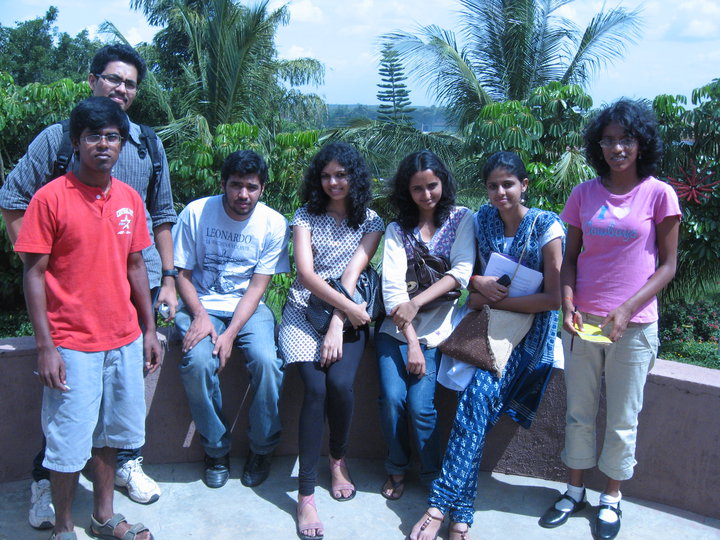
As part of the IDIA project- Karnataka chapter, a team of six students[1] visited Shanti Bhavan- a school in Baliganapalli, an impoverished area in the Krishnagiri district of Tamil Nadu that targets children of deprived backgrounds. A student of Shanti Bhavan, Rajini Murugeshjan, has made it into the National Law School of India University, Bangalore after writing CLAT 2010 and we were hoping to find more students who are interested in pursuing law as a career option.


Adithya Banavar started the session by talking a bit about the project to about 60 students from the 8th -12th grade and the option of law as a career option. Only one student from the 12th grade was interested in pursuing law. Most of the other students were either undecided or favoured Engineering or Business. A lot of students were apprehensive about law as they felt that belonging to a particular stream in the 12th grade would hinder their admission into law school.

After clearing their doubts we proceeded to perform a few skits on varied legal topics such as Constitutional law, Criminal law, Family law and Consumer Protection law. We saw that the children were well versed in English and basic legal knowledge, perhaps owing to the fact that they have learnt civics. They were confident and answered most questions and asked us intelligent questions on legal areas. We then interacted specifically with the 14 students belonging to the 12th grade who were giving the aptitude test. We saw that almost every student had decided which field to specialize in and the disinterest in law was not so much a result of ignorance but the perception of lawyers as being poorly paid. We spoke to them about the various advantages of doing law from a premier legal institution and the various career options one can pursue after doing the course. We also cleared doubts as to the age limit for the course.

We then conducted a 30 minute aptitude test which tested them on English, Mathematics, Logical reasoning, Legal reasoning and General knowledge.

Report prepared by Aathira Menon


[1] Adithya Banavar, Deepika Kinhal, Basavana Gowda, Nishita Vasan, Aathira Menon from NLSIU, Bangalore and Javedur Rahman from NUJS, Kolkata.

Thursday, November 26, 2009

LLP at SOS Childrens Village, Bangalore


It was a pleasant afternoon on the 2nd of October, 2009, when the seven of us - Rahul (V year), Lakshmi (II year), Kanika (III year), Nidhi (III year), Nishita (III year), Aqseer (III year) and Protiti (II year) – packed into a Qualis and trundled off to the SOS Children’t Village on Banerghatta Road. The sight that welcomed us there was such that it made us all stand still in awed delight – lush green and bright flowers, and happy little children everywhere!


We began the LLP with a skit highlighting the necessity of consumer awareness. Kanika portrayed a shopkeeper who sold Aqseer and Lakshmi foodstuffs that had crossed the expiry date. Our audience, which was aged between 12 and 15 years, very correctly pointed out that the customers had not checked the dates of the products before buying them and had not asked for a bill either. The methods of approaching the Consumer Fora and procedures involved therein were explained to them.

Next was a skit on Child Rights, wherein Nidhi portrayed a young girl who was being forced to marry against her wishes while she actually wanted to study further. The children pointed out that it was wrong to not let her study further. Nidhi then told them about the importance of mutual consent for marriage and a child’s Right to Education, while Protiti told them about a child’s Right against Employment and Exploitation.


The next skit depicted domestic violence wherein Protiti portrayed an abused housewife who was being economically, mentally and verbally being tortured by her mother-in-law, played by Nishitha. Rahul, who played the role of the husband, brought home a second wife, Kanika, who was preferred because she could offer higher amounts of dowry. Aqseer discussed the issues of dowry harassment and domestic violence with the children, with many interesting inputs coming from their side as well.

The last skit showed Nidhi, a domestic help, was arrested by a Protiti, playing a Police officer, late at night without a warrant. The essential conditions for arrest were explained to the children.

Nishitha then spoke to them about Legal Aid, and we distributed LSC bookmarks and Melodies! We came back with a happy and content feeling in our hearts.


Reported by
- Protiti Roy
(II Year)

Tuesday, August 4, 2009

A long awaited answer

A confusion which has been perplexing courts and leading to confused judgments for the past five decades, the governments seems to have finally woken up to the fact that the range of laws dealing with children in India, do not actually agree on the definition of a 'child' - the consequence - the menace of child marriage cannot be properly controlled or punished, marital rape above 15 but less than 16, technically the age of statutory rape, remains legal, and dangerous delinquents perfectly capable of understanding the consequences of their actions have been going scot - free under the JJ Act. But now, there appears to be a movement to make the definition of child across all these laws 'uniform'

"Centre to examine anomalies in definition of child: SC told New Delhi, Aug 3 (PTI) The Centre today told the Supreme Courtthat it was examining the issue of removing the anomalies in thedefinition of a child in various existing laws which were comingin way of checking the menace of child marriage. It said the Child Marriage Restraint Act has been repealed withthe new law and the issue has been taken care of. "I have recieved some documents and I will go through them and filean appropriate response," Additional Solicitor General Indira Jaisingsaid before a Bench comprising Chief Justice K G Balakrishnan and Justices P Sathasivam and A K Ganguly which adjourned the matter for four weeks. During the hearing, advocate Aparna Bhat said the new legislation The Prohibition of Child Marriage Act, 2006, which got the President's assent in Janaury 2007, did not completely address the concern over child marriage. Earlier last year, the apex court was told that the Law Commissionwas examining anomalies in the definition of child in various existing laws. The National Commission for Women and the Delhi Commission for Women had said there were anomalies in the definition of child. They contended that the variance in age in different Acts to define a 'minor' or a 'child' was coming in the way of dispensationof justice, particularly in cases of girls below 18 years marrying after eloping with adult male"

Sunday, July 26, 2009

Weekly Legal Issue #1

In order to enthuse the followers of this blog, members of the LSC and other legal aid enthusiasts, I plan to introduce discussions on points of law concerning the LSC's mandate of dispensation of justice, based on hypothetical fact situations. It is hoped that this would be a weekly exercise.

Fact: X, is a woman who has been subjected to physical abuse by her husband for the last 15 yrs. X decides to file for divorce after her husband's latest abuse involving a hockey stick. X's husband runs away from home in the meanwhile and this is the third time he does so. X, in addition to divorce seeks immediate protection against her husband as she fears more violence on his return, but refuses to resort to criminal action.

Which is the most effective short term legal solution that is available to the woman for the protection of herself and children in addition to divorce?

Is the concept of "nudging" as described in
http://www.economist.com/world/unitedstates/displaystory.cfm?
story_id=12932224
a viable option?

LLP on 17/07/09

The Legal Services Clinic had organised a Legal Literacy Programme for the students of Rockford School, Nagarbhavi, Bangalore. The team of 20 saw an audience of around 40 kids from classes 6th to the 9th. The students had a reasonable knowledge of the theoretical aspects of law but were unaware of the practical applications of the same. The LLP precisely tried to fill that void.

For this purpose the Legal Services Clinic along with it’s volunteers performed short skits on some of the most relevant provisions of the Constitution and other statutes. These were Art. 19(1)(a) of the Constitution, Right to information Act, Consumer Protection Act, Right to Constitutional remedies. Common examples were taken to create an understanding of how law comes to one’s rescue when he is wronged in his day to day work. These skits also helped to send across a message on the power of the black letter of law, which empowers them with knowledge of their genuine interests.

The enthusiastic interaction that ensued between the students and the LSC members assured us that the message had been received well. Their overwhelming response will surely encourage LSC to undertake more of such trips in order to make laws more accessible to people. The dedicated students who were a part of the LLP are: Vikram, Bhargavi, Nishita, Adithi, Ramyaa, Aqseer, Reeba, Shubhang, Nidhi, Abhijeet, Nandi Verman, Niharika, Akshaya, Geetha, Sahana, Trishee, Ramya, Varsha, Meera and Linda.

- Trishee

Wednesday, May 20, 2009

Criteria for membership for the year 2009-2010

I. Inside LSC Activities

1. Work at the NLS Centre [1] [3]
5. Work at Ramnagaram [3]
3. Legal Literacy Programmes [3]
4. Research work in LSC’s research projects [2]
6. Others [4]

(e.g assistance with online queries, scanning and documentation of records, judicial management research work,)[2]
Please give a detailed description of the kind of work done and the cases handled and also the specific role played in legal literacy programmes.

II. Outside LSC Activities
1. Relevant placements during 2007-08 [2]
Please give a detailed description of your work. Relevant placements include work in NGOs involved in pro bono lawyering, legal literacy, Lok Adalats, alternate dispute resolution issues, advocacy initiatives. Placements which involved extensive drafting of legal documents and applications may also be mentioned with a detailed description of the nature of documents drafted.
2. Articles on socio-legal issues (please attach copy of the article) [1]
3. Research at NLSIU under research groups and in association with the Centers and Round Tables (Please do not include research work done at your placements, only work done at NLSIU will be considered) [2]

III. Organizational Experience

* Head [3]
* Volunteer [1.5]


IV. Knowledge of Kannada [3]

1. Speaking [3]
2. Reading [1]
3. Writing [1]


Note: In case of any ambiguity in the information provided by the applicant, the undersigned reserve the right to call the person for an interview to clarify the same. If a tie occurs, the same will be resolved through an interview.
[1] LSC members and co-opts for the year 2007-08 lose 25 % marks under this sub-head
[2] List is merely illustrative
[3] The same may be tested during an interview.

Students from both the LLB and LLM programs are eligible to apply.

Wednesday, April 22, 2009

A definite push towards a settlement

In some kinds of mediation/negotiation, the main issue is how much one party is obliged to pay to another. One of the reasons such a mediation/negotiation can fail can be is because the party who is claiming might not agree to any offer (even if it is reasonable) by the other party if he feels even though the chances of him getting an award better than the offer are very slim, he has nothing to lose by continuing with the litigation and even with a lower award he will be able to force the costs of litigation on the other party.

If this is indeed the practice, it seems unfair on many counts. First the party against whom the claim is made is forced into a litigation even when he is willing to settle. Assuming the court awards the claimant an amount lesser than the offer made by the opposite party, the court has in fact held that the opposite party's substantive rights are more than what he is willing to settle for. However, by imposing costs on the opposite party, the court gives the claimant an undue incentive to increase the burden of pending litigation on the court.

Relating to this I would like to call the attention of the reader to rule 68 of the US Rules of Civil Procedure
It reads-

Rule 68. Offer of Judgment


(a) Making an Offer; Judgment on an Accepted Offer.

More than 10 days before the trial begins, a party defending against a claim may serve on an opposing party an offer to allow judgment on specified terms, with the costs then accrued. If, within 10 days after being served, the opposing party serves written notice accepting the offer, either party may then file the offer and notice of acceptance, plus proof of service. The clerk must then enter judgment.

(b) Unaccepted Offer.

An unaccepted offer is considered withdrawn, but it does not preclude a later offer. Evidence of an unaccepted offer is not admissible except in a proceeding to determine costs.

(c) Offer After Liability Is Determined.

When one party's liability to another has been determined but the extent of liability remains to be determined by further proceedings, the party held liable may make an offer of judgment. It must be served within a reasonable time—but at least 10 days— before a hearing to determine the extent of liability.

(d) Paying Costs After an Unaccepted Offer.

If the judgment that the offeree finally obtains is not more favorable than the unaccepted offer, the offeree must pay the costs incurred after the offer was made.

(c) and (d) are especially important here. What such a rule does is not just set right the inequity I pointed out earlier but also gives the claimant a strong reason to agree to a reasonable offer of settlement. Someone told me that this is in practice in India too, but I couldn't find the relevant provision anywhere and can't think of any instance where I've seen this happen. Does seem indeed to be a necessary change. What say?